
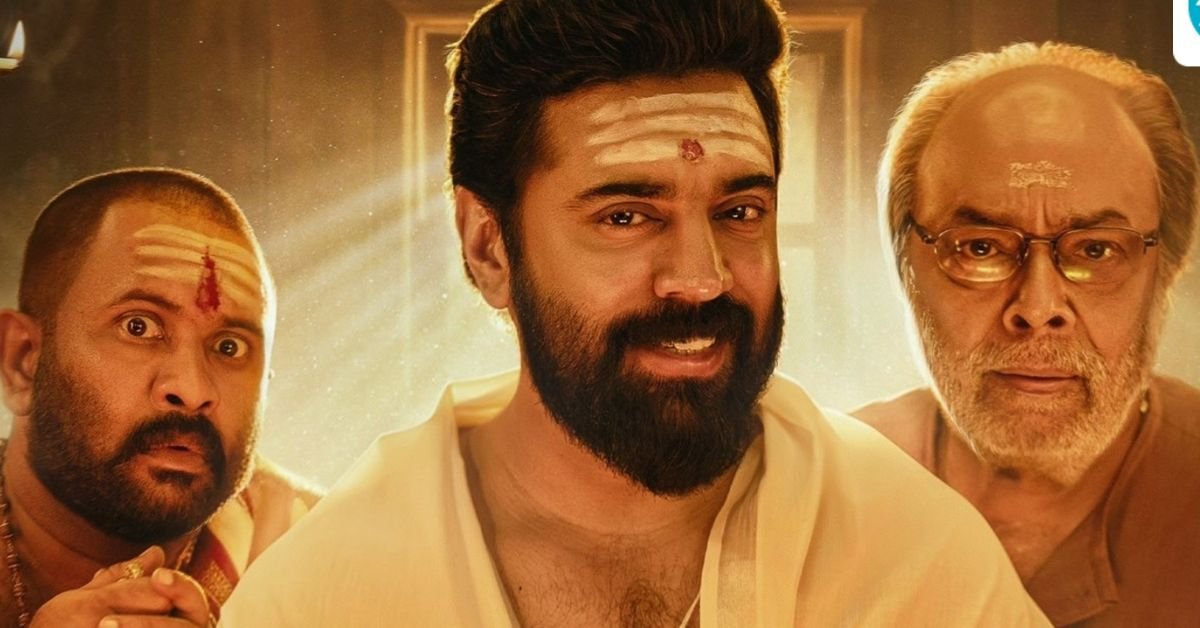
Sarvam Maya Review: In the age when the Malayalam cinema is more and more identified with realism, trauma, and grey areas of morality, Sarvam Maya would be presented as a rather radical proposition: what would it be like to make kindness the main subject matter? The movie directed by Akhil Sathyan is not in search of newness in shocks or darkness. Rather, it reinvents what contemporary cinema tends to take lightly, emotional reassurance. And that decision, particularly in 2025, is what makes the film, in particular, relevant.
A Fantasy That Refuses to Be Escapist
Even though the existence of a ghost can be an indication of genre cinema, in the case of Sarvam Maya, fantasy serves not to blur the reality but to smooth it out. The supernatural factor is used as a moral reflection rather than as a storyline device. The movie steals the emotional grammar of the traditional guardian-spirit narratives, and reinvents them in a contemporary Indian setting, where belief, non-belief, mourning, and aspiration are in an uncomfortable relationship with each other.
It is not the ghost that matters here, but what the ghost enables the characters to face: unresolved loss, self-doubt and silent burnout of living up to the expectations of another.
This is fantasy with responsibility—one that knows when to step back and let human vulnerability take centre stage.
Nivin Pauly and the Politics of Likeability
To Nivin Pauly, the movie is not just a comeback but a re-adjustment. According to the years, viewers have observed him in more strained and contradictory roles. Sarvam Maya leads him back to the good man archetype- but not on the crutch of a nostalgic.
His character, Prabhendhu is not complicated in design. That simplicity is the point. At a time in cinema during which the beginning of the story is to see the character in a state of brokenness or moral conflict, the display of decency free of irony is near subversive.
The film asks an uncomfortable question: Why do we treat emotional warmth as lesser cinema?
Faith Without Preaching, Religion Without Hierarchy
The way the film treats religion is one of the silent successes of this film. Placing a Christmas story on the non-Christian hero, with a Christian ghost, might have easily degenerated into symbolism or sentimentality. On the contrary, pluralism is being normalized in the film.
Here religion is culturally/personal, occasionally inconvenient, but never weaponised. The fact that Prabhendhu is an atheist and that his family expects the ritualistic aspects of Hinduism is approached with mild humour, as opposed to judgement on the ideological basis. This reserved nature of the film resonates particularly in the modern socio-cultural setting in India where faith is described in absolutes.
A Director Embracing Inheritance Without Imitation
The family background of Akhil Sathyan, who is the son of Sathyan Anthikad, is bound to be compared. But Sarvam Maya tries not to repeat the past. In its place, it stretches a tradition of feel-good films into a generation that has been conditioned by burnout, doubt and isolation.
The movie realizes that the current generation does not simply desire to be optimistic but to be allowed to be hopeful once more without being assured that all will be well.
That distinction matters.
Why Films Like This May Shape the Future
The Sarvam Maya result can be alluding to a bigger change. Following years of hyper-realism taking over Malayalam cinema, there is a renewed lack of space from a few stories that focus more on emotional healing than narrative disturbance.
This doesn’t mean a retreat from artistic ambition. Rather, it suggests a broadening of what we consider meaningful cinema.
If filmmakers take note, we may see:
- More genre-blending narratives that prioritise emotional clarity
- A renewed respect for “comfort films” as culturally necessary
- Actors reclaiming sincerity without fear of seeming outdated
In that sense, Sarvam Maya is less about ghosts and more about courage—the courage to be gentle in a loud world.
The Bigger Picture
Sarvam Maya does not aspire to be a masterpiece. Its ambition is quieter, and perhaps more difficult: to leave the audience lighter than it found them.
And in a time when cinema often mirrors anxiety, a film that chooses reassurance is not escapism—it’s intervention.
Sometimes, that’s exactly the kind of magic people need.