
The Raja Saab Movie: Among the Indian big-budget releases, the heavy traffic of the calendar, few movies are able to create a discourse on two issues simultaneously creative ambition and the industry culture. That is what the Raja Saab is already doing–weeks before people even set foot into theatres.
It seems on the surface like a pan-Indian horror-comedy starring Prabhas that opens in the premium Sankranti holiday. And underneath the ad hype, there is something more captivating, a narrative gambit, a twist of performance, and a flashback of how emotionally charged star culture can be in Indian cinema.
A 15-Minute Role That Rewrites the Film’s DNA
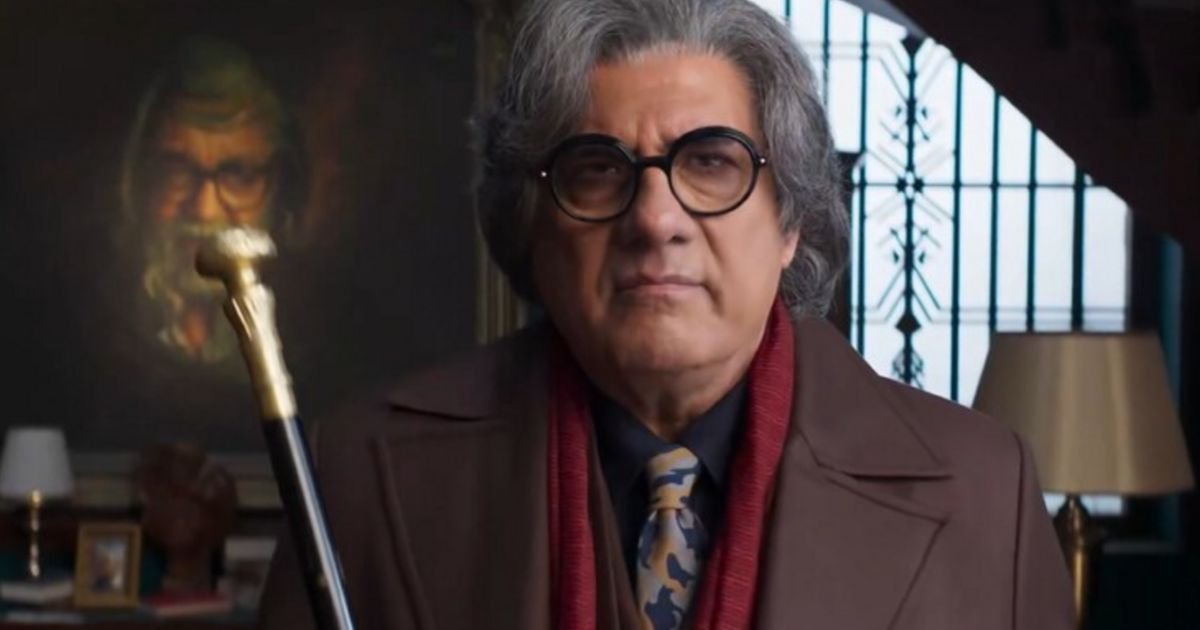
The filmmaker Maruthi has disclosed that Boman Irani, a veteran actor, has a role of a psychiatrist whose entry essentially changes the genre and emotional narrative of the film.
This isn’t a cameo designed for applause. According to the director, once Irani’s character enters, the film abandons predictable horror-comedy beats and moves into territory audiences won’t see coming.
Why this matters:
- Indian commercial cinema rarely allows tonal disruption mid-film
- Psychiatrist characters are often expositional; here, the role becomes transformational
- Irani rehearsed dialogues in both Telugu and Hindi, signaling serious pan-India intent
Irani has played such roles before, specifically authority figures with disturbing psychological depth, which explains his particular suitability in such a role. His memorable act in 3 Idiots is the benchmark that several insiders are covertly referring to. The difference? This time, the pain is supposed to be permanent.
Prabhas and the Risk of Reinvention
Since Baahubali, Prabhas has been experiencing a strange problem scale without any shock. Massive openings will be anticipated. What is not guaranteed is emotional innovation.
The Raja Saab tries to resolve this issue by putting him in a genre mash-up, which requires him to be discreet, time-conscious, and psychologically weak, which may not necessarily be part of the bigger-than-life stardom.
The presence of several female protagonists, genre blending, and an actor-based second half all could indicate a shift away at formula spectacle in favor of orchestrated unpredictability.
If it works, it could quietly reset expectations around what a “Prabhas film” can be.
When Promotions Turn Into Flashpoints
No modern Indian release escapes social media scrutiny, and The Raja Saab is no exception.
One of the promotional statements made by Maruthi that some of the fans interpreted as the belittlement of the status of Prabhas caused an immediate backlash. The fact that controversies are commonplace meant nothing in his clarification but that he openly admitted his fault.
He reaffirmed:
- His respect for Prabhas as a star and individual
- That his words were driven by emotion, not hierarchy
- That commenting on peers like N. T. Rama Rao Jr. is not something he claims authority over
In an industry where deflection is common, this level of direct accountability stands out.
The Bigger Picture: What This Signals for Indian Cinema
Beyond box office projections, The Raja Saab represents three evolving trends:
- Veteran actors reclaiming narrative power
Not as supporting ornaments, but as story disruptors. - Genre films demanding performance depth
Horror-comedy is no longer a “safe” space—it’s becoming psychologically layered. - Audiences expecting humility, not just hype
Promotional conduct now shapes perception as much as trailers do.
What to Watch When the Film Releases
When The Raja Saab arrives in theatres on January 9, the real test won’t be opening numbers. It will be:
- Does the tonal shift feel earned or jarring?
- Does Boman Irani’s character leave an aftertaste?
- Does Prabhas surprise us—not with scale, but with stillness?
If the answers lean positive, this film won’t just be remembered as a Sankranti entertainer—but as a moment where mainstream Indian cinema quietly took a creative risk, and didn’t look away.
Sometimes, the most important change in a film isn’t the hero’s entry—but the moment the story decides to change its mind.