
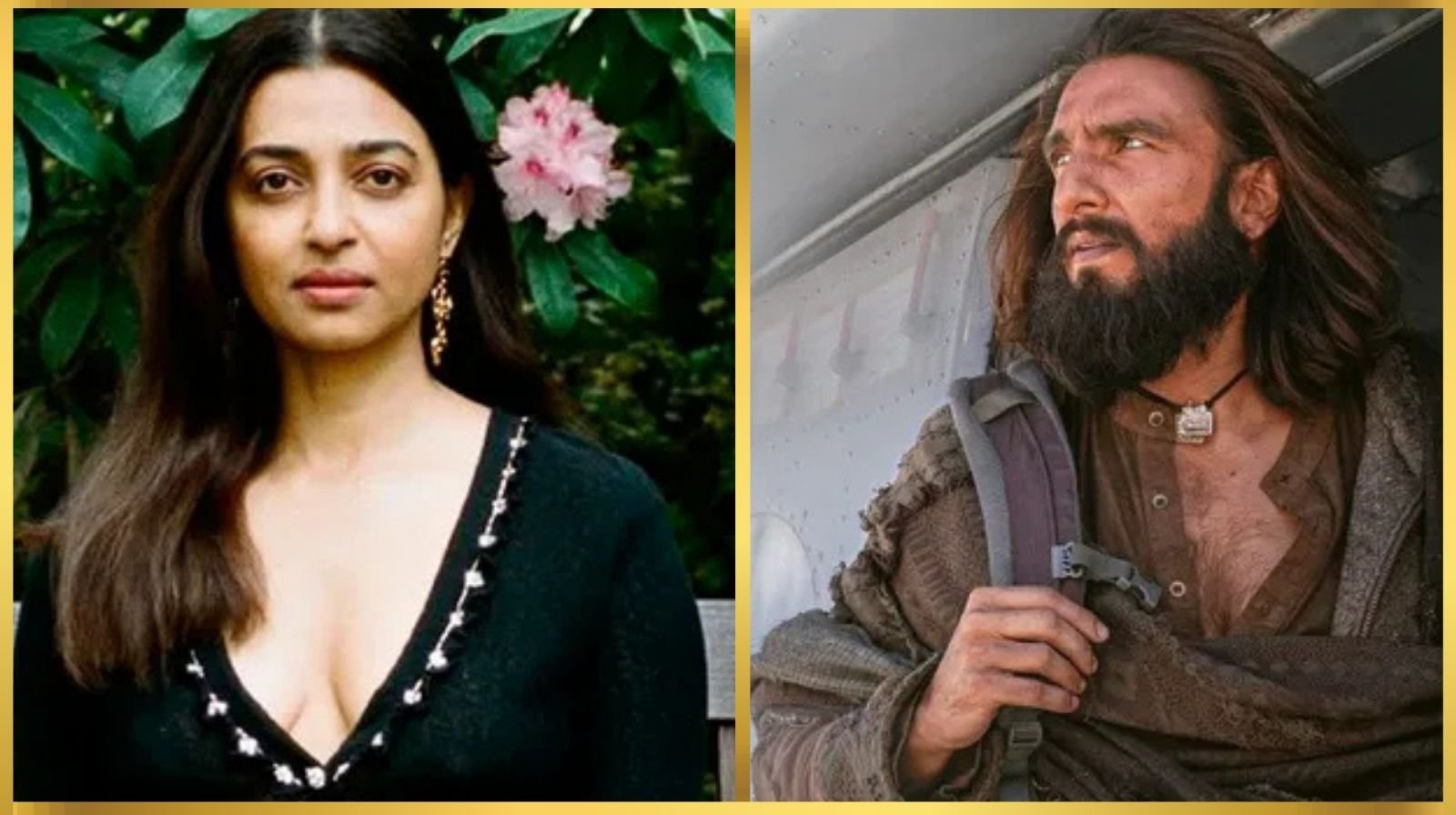
Bolly Actress Criticising Dhurandhar: Radhika Apte, who is one of the Bollywood actors, is not unfamiliar with debates, discussions, and controversies. Her fearless decision making and outspokenness have frequently made controversial discussions that polarized the listeners. Her statements about violence in movies have again put her in the limelight in the recent past.
Radhika has raised strong concern on the increasing violence in movies during an interview when she was doing promotions of her recent OTT release Saali Mohabbat. Although she did not mention a particular film, several audiences took her remarks as an indirect attack on a newly released film, Dhurandhar, by Ranveer Singh.
This was followed by a heated debate on the internet. The reason to many netizens was whether an actress who used to do bold and intimate scenes can now morally stand to complain against violent or disturbing material in cinema.
This article explores the full context behind Radhika Apte’s comments, public reactions, her career trajectory, and the larger debate around cinematic responsibility vs artistic freedom.
Who Is Radhika Apte? A Brief Career Overview
Radhika Apte is widely regarded as one of the most versatile actresses in Indian cinema.
Key Highlights of Her Career
- Started her career in theatre before entering films
- Gained recognition through Bollywood, Marathi cinema, South Indian films, and OTT platforms
- Known for content-driven films rather than mainstream commercial cinema
- Popular for strong performances in films like Badlapur, Parched, Andhadhun, and several Netflix originals
Her screen presence that was bold and the fact that she was prepared to experiment popularized her with filmmakers who desired realism as opposed to glamour.
Radhika Apte and Bold Roles: The Early Phase
One cannot discuss the current controversy without acknowledging Radhika Apte’s earlier film choices.
Her Image as a Fearless Performer
- Took on bold characters involving intimate scenes
- Played roles involving sexuality, violence, and psychological intensity
- Often defended such choices by stating that the story demanded realism
Radhika herself had earlier stated in interviews that cinema should reflect society honestly, even if it makes viewers uncomfortable.
This past stance is exactly why many people now feel surprised by her recent criticism.
What Did Radhika Apte Say About Violence in Films?
During a promotional interview for Saali Mohabbat, Radhika expressed concern over the increasing normalization of extreme violence in cinema.
Key Points From Her Statement
- Violence is being sold as mainstream entertainment
- Such content can negatively affect society
- She questioned whether children can be raised safely in a world consuming such cinema
- Filmmakers should introspect on the impact of content
Although she avoided naming any film, social media users quickly connected her remarks to Ranveer Singh’s Dhurandhar, which had released just days earlier and is known for its intense action and violent sequences.
Why Dhurandhar Became the Center of the Debate
Dhurandhar has been marketed as a raw, high-octane action film with stylized violence.
About the Film
- Starring Ranveer Singh in a fierce, aggressive role
- Directed as a mass entertainer with heavy action
- Received mixed reactions — praise for performance, criticism for excessive violence
Given the timing of Radhika’s comments, audiences assumed her remarks were indirectly aimed at this film.
Netizens’ Reaction: Social Media Turns Critical
The backlash on social media was swift and intense.
Common Arguments From Critics
- Why didn’t Radhika raise concerns earlier when she acted in bold and violent films?
- Selective moral policing when career opportunities slow down
- Using controversy to stay relevant in the media
Many users pointed out that artistic freedom applies equally to intimacy, violence, and dark storytelling.
Is This a Career Shift or a Change in Perspective?
One important question remains:
Is Radhika Apte being hypocritical, or has her worldview genuinely evolved?
Possible Reasons for Her Changed Tone
- Personal growth and maturity
- Exposure to global discussions around content responsibility
- Transition into OTT-driven cinema with mature themes
- Societal shifts demanding accountability from artists
It is not uncommon for artists to reassess their beliefs as they grow older and gain new life experiences.
The Larger Debate: Violence vs Artistic Freedom
This controversy highlights a broader issue in Indian cinema.
Key Questions Raised
- Should cinema reflect reality, even if it’s disturbing?
- Who decides what is acceptable content?
- Is censorship the solution, or audience discretion?
- Does responsibility lie with filmmakers or viewers?
Cinema has always walked a fine line between expression and influence, and debates like this prove that there are no easy answers.
Radhika Apte’s Current Career Phase
While Radhika may not be headlining big-budget theatrical releases currently, she remains a strong presence in OTT content.
Current Position
- Focus on OTT platforms and international collaborations
- Continues to choose performance-oriented roles
- Maintains relevance through interviews and social commentary
Her outspoken nature keeps her visible, but it also makes her vulnerable to criticism.
Public Figures and Moral Commentary: A Double-Edged Sword
When actors speak about morality, they are often judged by their past choices.
Why Celebrities Face Higher Scrutiny
- Their work is publicly archived
- Statements are compared with past actions
- Audiences expect consistency
This makes it difficult for artists to express evolving opinions without facing backlash.
Final Thoughts: Hypocrisy or Honest Concern?
With or without acceptance of Radhika Apte, her remarks have brought a vital discussion of the responsibility of the content, in movies, back to the table.
Her past decisions might have contradictions, however, the rejection of her worries simply triggers the fact of personal development.
Eventually, the cinema can live by various voices, discussions, and disagreements- and scandals such as these belong to that ecosystem.
Hi there to all, for the reason that I am genuinely keen of reading this website’s post to be updated on a regular basis. It carries pleasant stuff.